

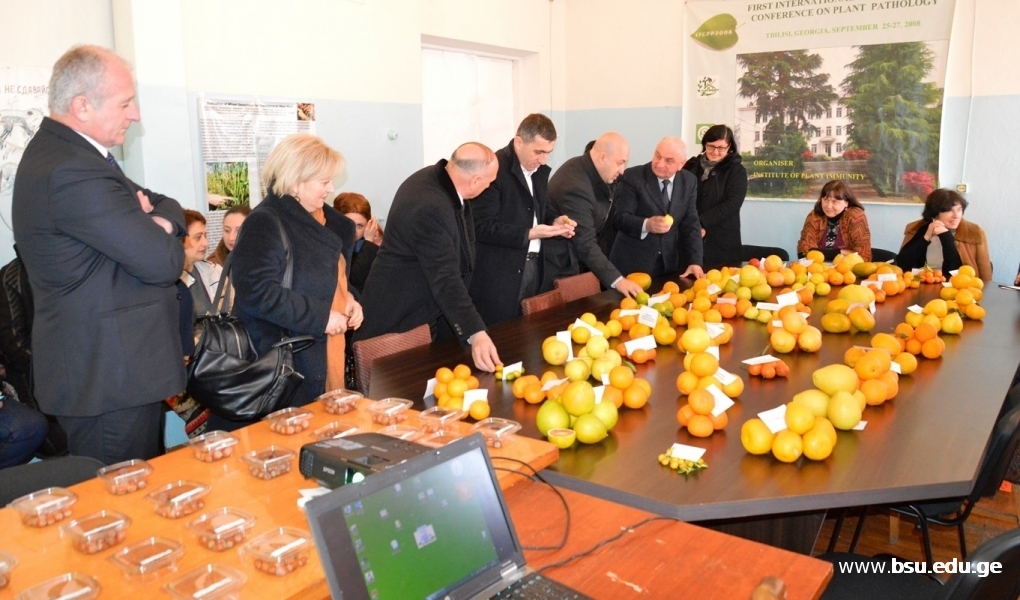
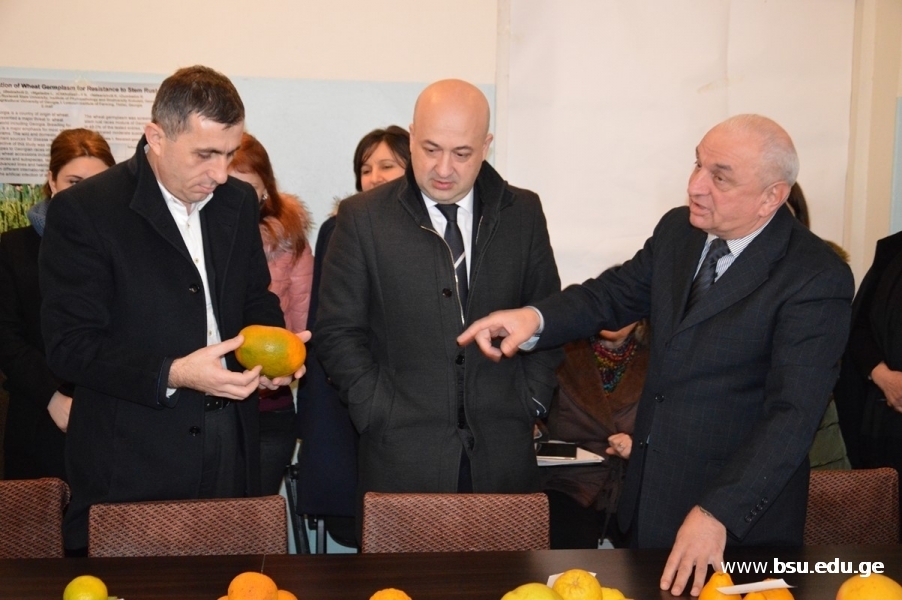
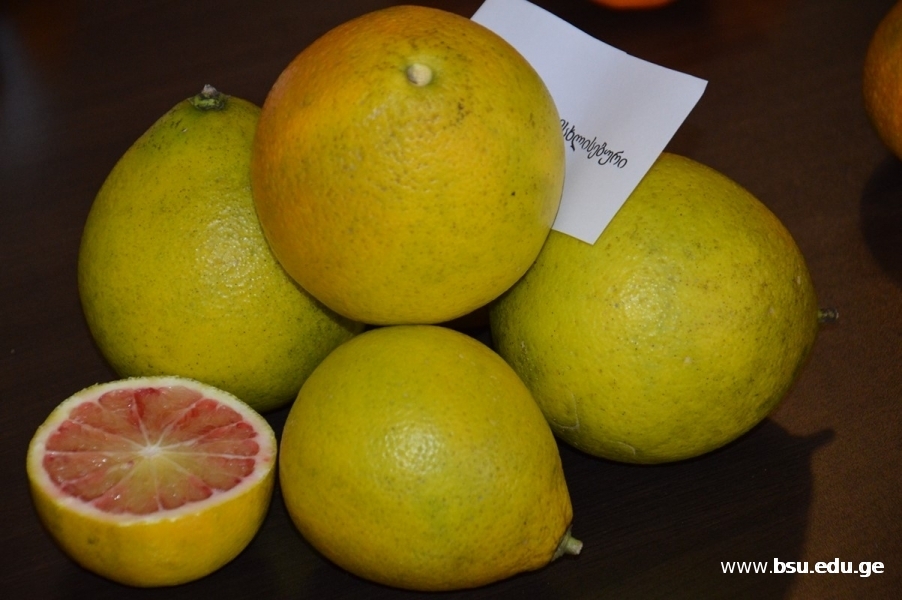
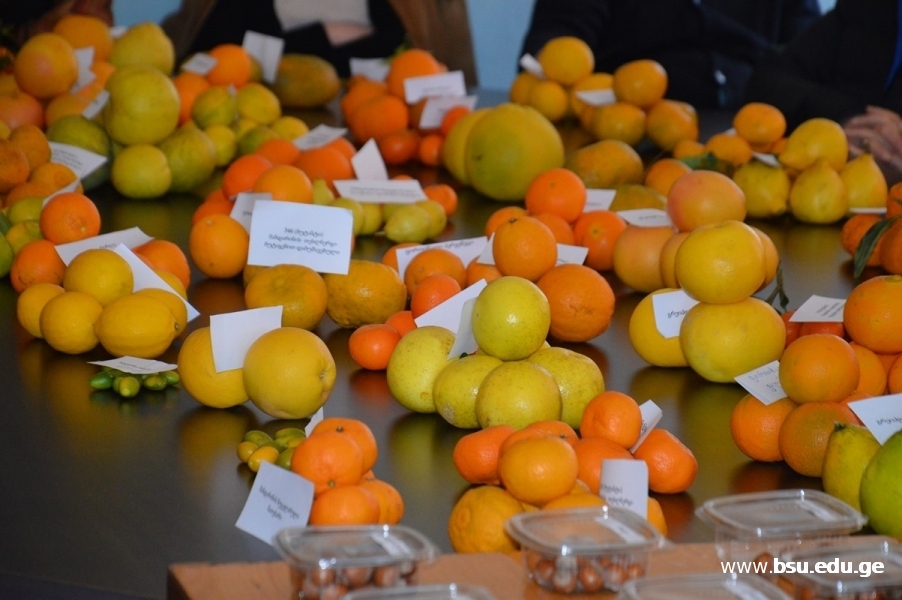
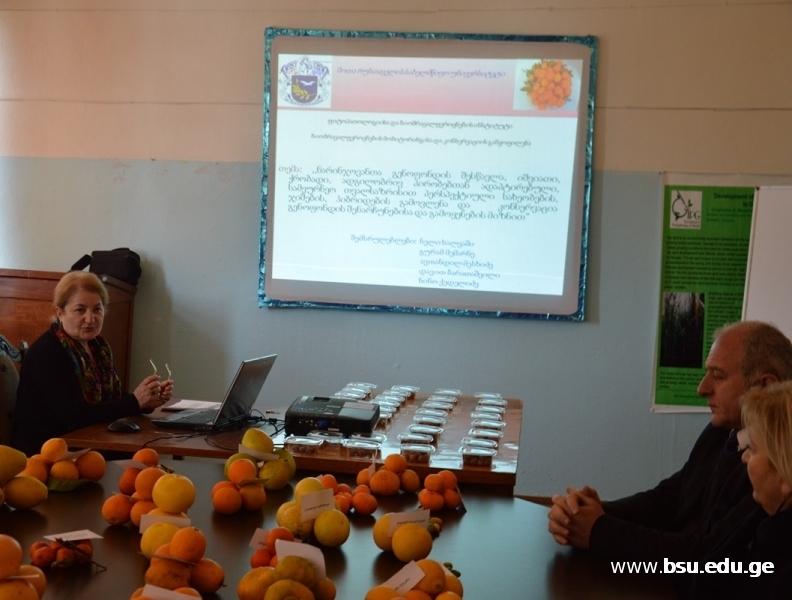
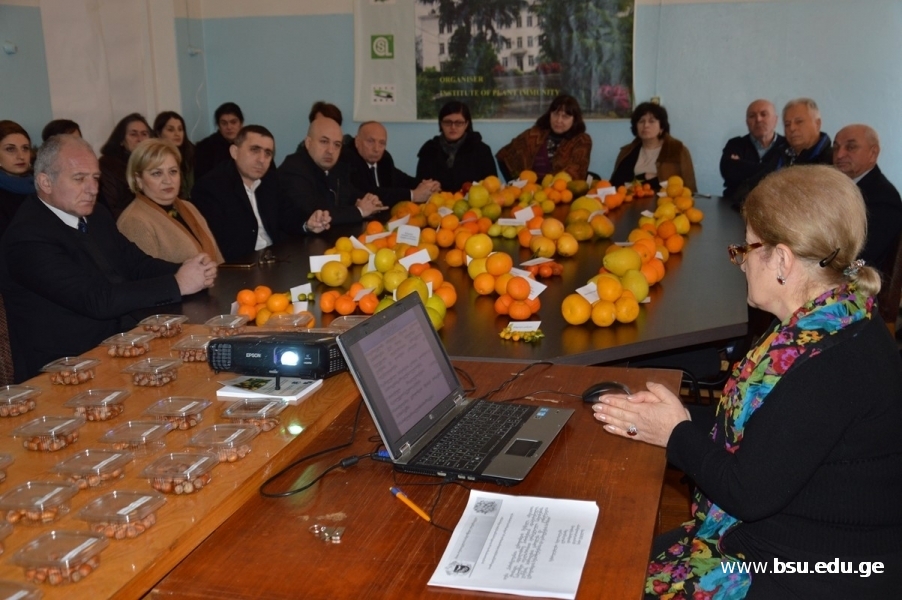
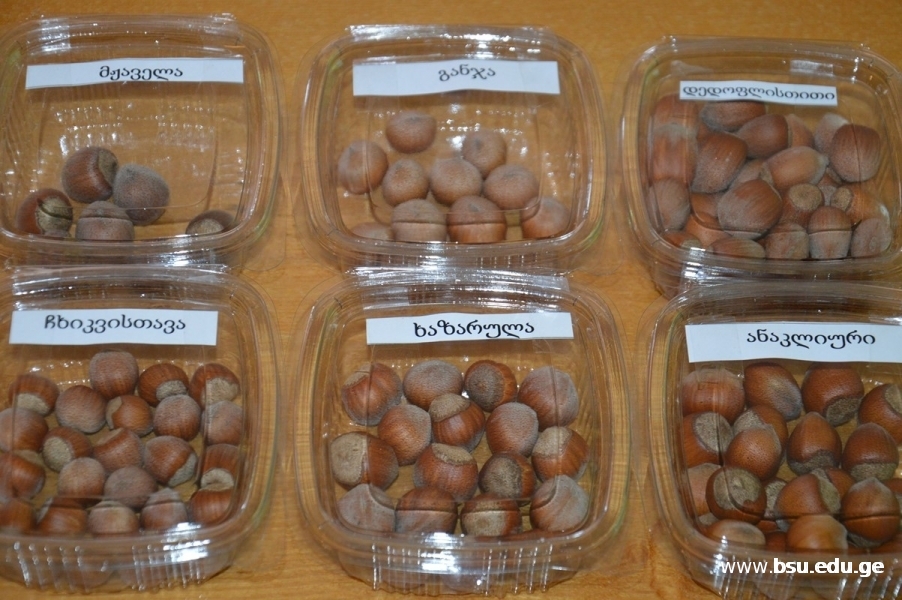
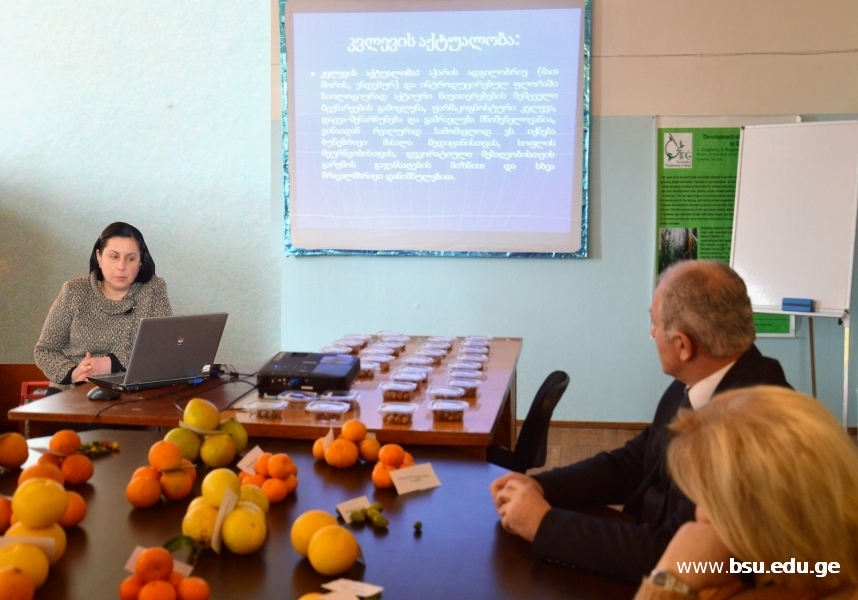
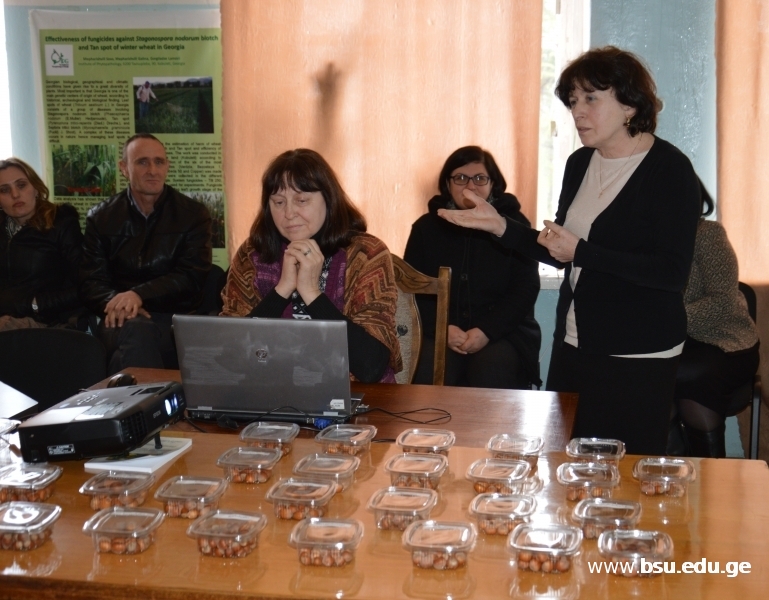
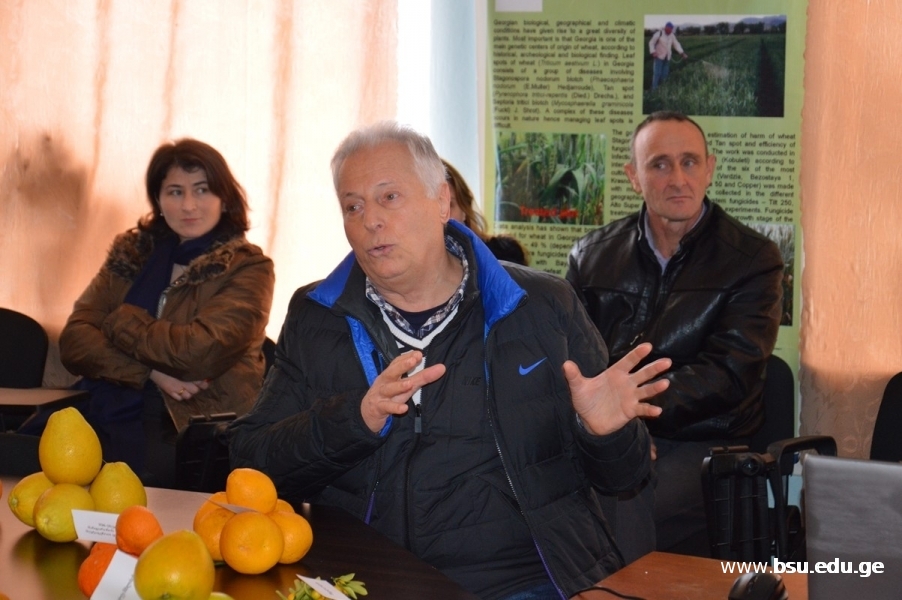
Batumi Shota Rustaveli State University Institute of Phytopathology and Biodiversity scientists presented a report on the scientific research work for 2016., The presentation was attended by the University rector Merab Khalvashi, Minister of the Adjara AR Agriculture Lasha Kobakhidze, Deputy Rector of BSU Natia Tsiklashvili and the Head of the BSU Administration Jemal Ananidze.The scientists presented the research outcomes of the biodiversity studies covering the orange geno-fund, rare and endangered species adapted to the local conditions, hybrids revealing and studying, their protection and maintenance. The research results also dealt with dozens of rare orange species and over 20 species of nut obtained in the framework of the expedition.
The scientists also reported on the more than 80 apple and pear varieties and kiwi cultivation three-year plan in the highlands, which they described in their research of the fruit diversity in the Adjara seaside area and the highlands, biologically active substances in the local and introduced flora species, their cytotoxic effects on tumor cells. 6 plant species were given the global status and put into the World Red List in 2016 as a result of the work carried out by the Institute of Colchis Wetlands and Aquatic Ecosystems Conservation Department.
The research outcomes include the GIS map of the Emerald habitats and species, The research became the groundbreaking work for the submission of Colchis peat bogs and the forests for the UNESCO-s World Natural Heritage Site nomination. Consequently, BSU became the official member of the Scientific Center of the Wetlands; Over 30 years the indicators of the Black Sea ecological improvement parameters were given the quality assessment ‘good’. Yet the most exciting discovery of the research is finding of the extinct species of the Atlantic sturgeon. Phytopathological studies in 2016 revealed diseases in the agricultural and other cultures with the economic impact. The scholars studied biological features of the disease-causing pathogens.
The scientists participated in the Phytosanitary Control Program in 2016 implemented by the National Food Agency at the Ministry of Agriculture.
Under the program, 2000 samples were introduced from 12 regions. The research outcomes gave basis to the recommendations on the disease control methods which were issued to various regions.
The institute’s Department of Genetics of Resistance carried out the population-genetic research of the Rust Diseases in Wheat, the implementation of which has an economic importance. Another study was devoted to the immunologic evaluation of the local and introduced agricultural breeding materials against the diseases with the economic impact.
The scientists have also studied the present situation of the invasive flora along the Black Sea and established a new invasive species.

| Back |
